

Changelog Format Conventions and Tradeoffs
Choosing a changelog format is a structural tradeoff, not a default.
September 30, 2026
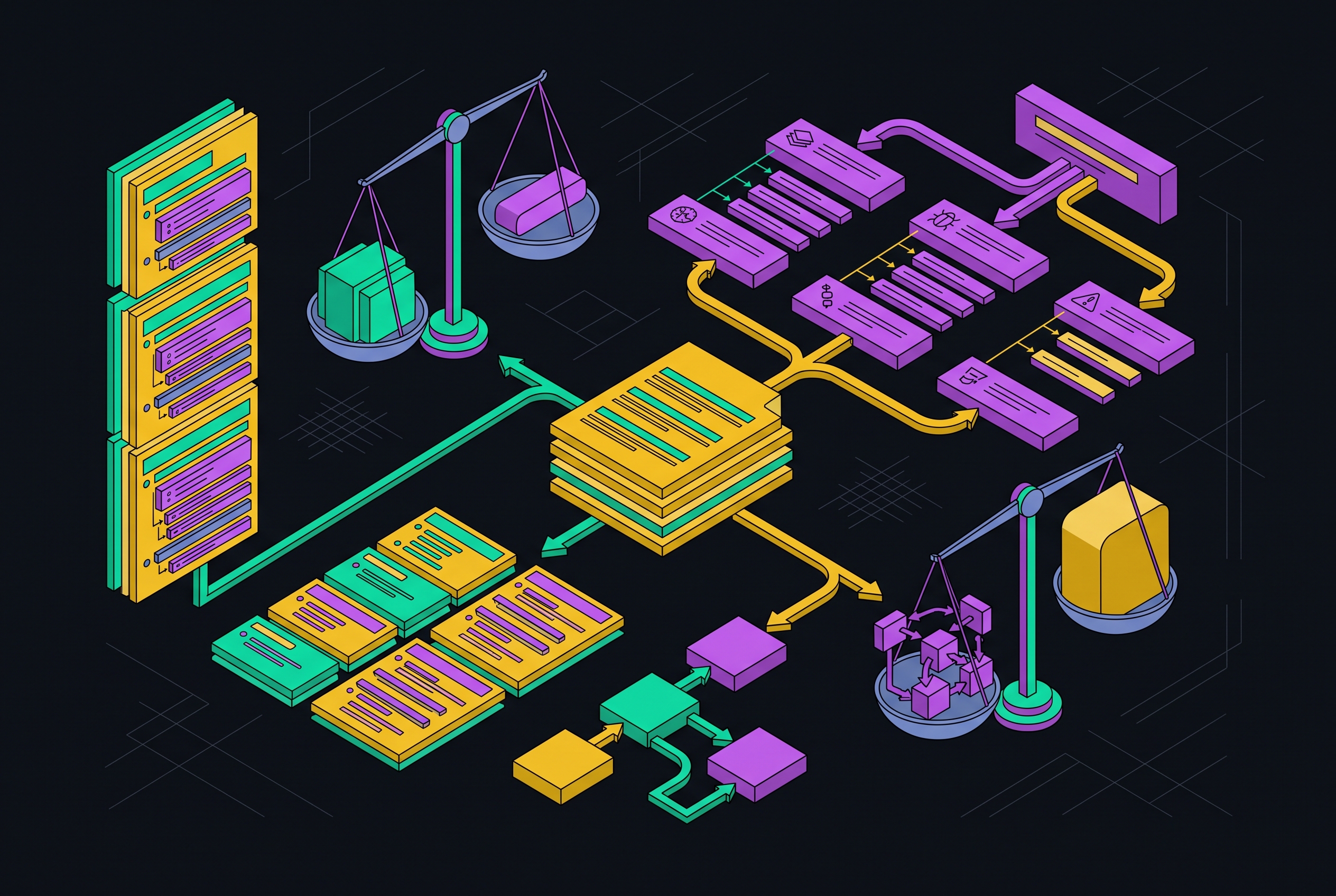
Why changelog format is a decision, not a default
- Role: Opens the piece by reframing the stakes — format choices are functional tradeoffs, not housekeeping — and establishes the editorial through-line every subsequent section will develop.
- Most teams inherit a changelog format rather than choose one: a CHANGELOG.md copied from another repo, a release page that mirrors whatever the CI pipeline spits out, or a Notion doc someone started once
- The real cost of an unconsidered format: developers can't find breaking changes, support can't answer "what changed last week," and prospects read stale dates as a signal the project is dead
- Per a 2024 Tidelift survey, the majority of open-source maintainers consider a changelog essential for project health — yet most changelogs fail at their basic purpose by being either too technical or too vague
- Format is not aesthetic: every structural decision (category taxonomy, versioning scheme, audience framing, publishing cadence) carries a concrete tradeoff between precision and readability, between developer trust and user adoption
- Thesis statement: understanding those tradeoffs lets teams pick conventions that match how they actually ship, not how they aspire to document
- Note: Open on the inherited-format problem, not a definition of "changelog." The reader already knows what a changelog is; start where the real confusion lives.
What Keep a Changelog and SemVer actually prescribe, and what they leave open
- Role: Grounds the piece in the two dominant conventions before the tradeoff analysis begins — establishes the shared vocabulary every subsequent section assumes.
- Keep a Changelog (keepachangelog.com, currently at version 2.0.0 per the Unmarkdown source) defines the canonical six categories:
- Added — new capabilities
- Changed — modifications to existing behavior
- Deprecated — advance warning before removal
- Removed — confirms what was deprecated is now gone
- Fixed — addresses known issues
- Security — vulnerability patches; always called out separately
- Also prescribes: file named CHANGELOG.md, entries in reverse-chronological order, ISO 8601 dates (YYYY-MM-DD), and an [Unreleased] section at the top for in-progress work
- Semantic Versioning (SemVer) pairs with Keep a Changelog: MAJOR increment for breaking changes, MINOR for new backward-compatible features, PATCH for bug fixes that do not change interface or behavior
- What neither standard prescribes: tone, audience targeting, how many words per entry, whether to include visuals, how to handle multi-audience publishing, or what to do when the changelog is the only release communication a user ever sees
- Those gaps are where real format decisions begin — and where teams diverge
- Note: Keep this section factual and compact. Its job is to establish a shared baseline, not to be a tutorial. One concrete example of the format (a short block showing version, date, categories) is enough; don't reproduce a full CHANGELOG.md.
The stricter variant: Common Changelog and what its additional constraints trade away
- Role: Introduces the first concrete tradeoff — strictness vs. friction — by contrasting Common Changelog with Keep a Changelog, showing that "more discipline" has a real cost.
- Common Changelog builds on Keep a Changelog with two significant additional requirements:
- Every entry must reference a commit, and should reference a pull request or issue when available — creating an audit trail from user-facing description back to the code change
- Entries written in imperative mood: "Add search" not "Added search"
- The Changed category must explicitly call out breaking changes rather than letting readers infer them
- The tradeoff: for teams building developer tools or libraries where breaking changes carry real cost, the stricter format reduces ambiguity — but it also increases the discipline required from every contributor at PR time
- The PR-reference requirement is particularly double-edged: it creates traceability that security and enterprise teams value, but it means the changelog can only be as good as the team's PR hygiene
- Who benefits most from Common Changelog: open-source library maintainers, API-first products, teams whose users are themselves developers who will read diffs
- Who pays the highest cost: lean teams shipping fast where adding a PR reference to every changelog entry is another process step that will get skipped under pressure
- Note: Frame this as a genuine tradeoff, not a verdict. The point is not that Common Changelog is too strict — it's that strictness serves some contexts and punishes others. Let the reader locate themselves.
Versioning schemes beyond SemVer: date-based and codename approaches
- Role: Extends the tradeoff analysis to the version number itself — a choice most teams treat as obvious but that carries real downstream consequences for how readers interpret a changelog.
- Three versioning approaches in practice:
- SemVer (MAJOR.MINOR.PATCH): signals intent precisely — a MAJOR bump tells a developer to expect a breaking change before they read a word of the changelog. Strong for libraries and APIs.
- Date-based versioning (e.g., 2026.03.15): common for products on a regular calendar release schedule; tells users when without telling them how significant. Honest about cadence, silent about impact.
- Codename versioning (Ubuntu model): marketing-friendly, builds identity, but tells developers nothing about compatibility. Relies entirely on the changelog body to convey impact.
- The tradeoff axis: SemVer front-loads meaning into the version number itself; date-based and codename approaches push all meaning into the changelog entry, raising the stakes for how well that entry is written
- For products releasing continuously (daily deploys, feature flags), SemVer MAJOR increments become rare — the version number stops conveying useful information, and date-based versioning often fits better
- The decision is not independent of format: a team using date-based versioning must compensate by making breaking changes visually unmissable inside the entry, because the number itself gives no warning
- Note: No need to recommend a winner. The goal is to help the reader see which scheme matches their release rhythm and user base, not to adjudicate a debate.
The six changelog types and how audience shapes every structural choice
- Role: Shifts the analysis from format standards to audience — establishes that the same release needs to be communicated differently depending on who is reading, and that most format failures are actually audience mismatches.
- Six distinct changelog types, each serving a different reader and purpose:
- Public changelog — transparency to customers; drives trust and feature adoption
- Internal changelog — aligns marketing, support, and QA on what shipped; reduces "wait, when did that change?" conversations
- Developer changelog — technical record of commits, PRs, API changes; the right format for open-source and engineering-facing products
- Semantic changelog — consistent tags (Added, Changed, Fixed, Removed) optimized for scanning and automation
- Visual changelog — screenshots, GIFs, video; trades information density for engagement; Linear's changelog (linear.app/changelog) cited in 2025–2026 sources as the gold standard: dated, illustrated with product videos or screenshots, written in plain language, linked to docs
- In-app changelog — embedded in product UI; captures users who will never visit a changelog page
- The core failure mode: teams write one entry and expect it to serve all six contexts simultaneously — the result satisfies none of them
- The recurring anti-patterns that come from audience confusion:
- Too technical: "Refactored auth middleware for JWT validation" — the developer who wrote it knows what changed; everyone else does not
- Too vague: "Various improvements" — gives users no basis for action
- The target: specific plain language — "Faster load times on the dashboard" — specific enough to be useful, human enough to be readable
- GitHub's Octoverse data does not document a finding that repositories with structured release notes receive significantly more contributions than those without — audience-appropriate communication has measurable downstream effects on community engagement
- Note: The contribution-lift finding is the payoff for this section — build toward it rather than opening with it. The argument earns the statistic.
What structural discipline actually looks like at the entry level
- Role: Moves from taxonomy and type-selection to the granular mechanics of writing a good entry — this is where abstract tradeoffs become concrete craft decisions the writer can apply immediately.
- Breaking changes must be flagged visibly — never make readers infer them; a dedicated Breaking section at the top of the release, with a description of what changed, what the migration path is, and a link to a migration guide if the change is complex
- The [Unreleased] section as a workflow tool: teams that maintain it continuously make release day trivial — rename the section to the version number and date, open a new empty [Unreleased]; nothing gets lost between releases
- Linking version numbers to a diff or release page; referencing issues and PRs by number where useful — traceability without burying the entry in implementation detail
- Date format consistency: "2026-01-15" or "January 15, 2026" are both acceptable; mixing abbreviated dates with numeric shorthand and casual references like "last Tuesday" signals sloppiness and erodes the professional credibility the changelog is supposed to build
- One change per entry: "Fixed login bug and added export" is two entries; bundling unrelated updates forces readers to parse rather than scan
- The three questions every entry should answer: What changed? Who does it affect? Why should they care?
- Entry length calibration: one to three sentences per entry; if a change needs more explanation, link to a blog post or help article rather than embedding a wall of text
- Never delete old entries — a changelog is a historical record; if an old entry was wrong, add a correction note
- Note: Use a before/after pairing or two for the anti-patterns (too technical vs. plain language). Keep this section practical and fast-moving — it should feel like a checklist the writer can actually use, not a style lecture.
How cadence and publishing decisions interact with format
- Role: Introduces the temporal dimension — when and how often a team publishes is itself a format decision with tradeoffs, and it sets up the automation discussion that follows.
- Cadence is a format choice: teams on continuous delivery may post weekly or daily; traditional release cycles may post monthly or quarterly — neither is wrong, but the entry format must match the cadence
- Weekly cadence implies short entries; monthly cadence earns visuals and links to major announcements because the reader has waited long enough to want context
- The velocity signal problem: prospects evaluating a developer tool look at the changelog as a signal of momentum — "Last update: 3 days ago" reads differently than "Last update: 6 weeks ago," even if the underlying product is identical in both cases
- The structural gap: CI pipeline builds, tests, packages, signs, and deploys — it produces a changelog — it notifies a Slack channel — then it stops. The blog post, the release note a prospect will read, the social announcement that tells users the thing they asked for now exists: those happen by hand, or do not happen. For most small teams, they do not happen, not because it is hard but because developer marketing is unowned.
- Three simultaneous audiences every public changelog must serve: existing customers (retention — what's new), prospects evaluating shipping velocity (acquisition — is this team active?), and internal teams in customer success, support, and sales (operations — single record of launches)
- A cadence decision made for one audience often creates friction for another: shipping a developer-facing entry daily keeps engineers happy but overwhelms customer success; batching monthly is readable for customers but leaves the internal team guessing mid-cycle
- Note: The "developer marketing is unowned" framing is the emotional core of this section. Let it land before moving into the automation solution. Don't rush to the fix.
Conventional Commits as the upstream input that makes format automation possible
- Role: Bridges cadence to automation by explaining the prerequisite — structured commit messages — that most format discussions skip over. Without this foundation, the tools in the next section don't work.
- Before any changelog generation can be automated, the team needs structured commit messages — Conventional Commits provides the standard format: type(scope): description with a BREAKING CHANGE: footer
- The commit types that flow into a changelog, and the categories they map to:
- feat → Added
- fix → Fixed
- perf → Performance Improvements (refactor is typically excluded from the changelog)
- Types like docs, style, test, build, ci are typically excluded from the user-facing changelog — they are noise by default
- The key insight: Conventional Commits solves the "garbage in, garbage out" problem at the source — better commit discipline means better raw material for every downstream format decision
- The tradeoff: adopting Conventional Commits requires buy-in from every contributor; on teams with multiple contributors or open-source projects with external PRs, enforcement is a governance question as much as a tooling question
- GitHub reported a 29% year-over-year increase in pull requests in 2025 — with AI-assisted coding accelerating that pace, the gap between what gets built and what gets announced continues to widen; structured commits are the only scalable upstream input
- Note: The scale-pressure argument opens this section and earns the Conventional Commits prescription. Don't bury the point — use it to establish why this upstream discipline matters now more than it did two years ago.
The tools that automate changelog generation from structured commits
- Role: Names and characterizes the actual tooling landscape — moving from the why of automation to the what, giving the reader concrete options to evaluate.
- Two categories of automation tools, split along the audience axis:
- Commit-based generators (e.g., conventional-changelog, release-please (a release automation tool that also generates changelogs)): parse commit messages structured with Conventional Commits and produce developer-facing output; accurate but often raw — the entries reflect engineer intent, not user impact
- AI-powered tools: read code diffs and generate user-facing entries in plain language, with multi-channel distribution; trades some precision for readability
- Release Drafter GitHub Action (named tool, confirmed in sources): runs as a GitHub Action, keeps a live draft release, groups merged changes by labels, and can suggest version numbers — teams maintain the release note continuously as PRs land rather than building it at the end of the cycle; a live draft changes contributor behavior because reviewers start caring about labels that now shape the final release notes
- The API-driven pipeline vs. manual workflow:
- Manual: developer ships code → someone remembers to update changelog (maybe) → manually writes entry → formats correctly → publishes → notifies users separately; results in forgotten updates,
Signal-Driven Publishing
Sources
- How to Keep a Changelog: Format, Examples, Best Practices
- Changelog Best Practices: How to Publish Release Notes | Unmarkdown™ Blog
- Keep a Changelog: The Format Explained (and When to Outgrow It)
- changelogen vs conventional-changelog 2026 — PkgPulse Guides
- Common Changelog
- Keep a Changelog
- GitHub - vweevers/common-changelog: Write changelogs for humans. A style guide. · GitHub
- SemVer vs. CalVer: Choosing the Best Versioning Strategy for Your Project | SensioLabs